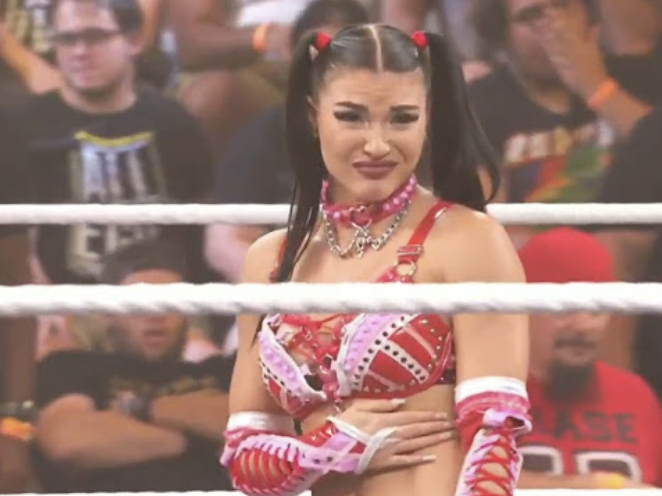
Once upon a time, Kouki Amarei wanted to dance with the gods.
Not in the ring, mind you. On a stage. Under lights softer than spotlights. She trained in classical ballet for ten years, stretching limbs and shaping discipline, chasing grace like it owed her rent. From the age of five, she aimed for pointe shoes and pas de deux—but the cruel twist of physics and gender imbalance struck early: there weren’t enough male dancers tall enough to lift her.
So she stopped chasing the waltz and started chasing fire.
By high school, she pivoted into music. After graduation, she dipped a toe into college—music again—but dropped out, restless. She was a street dancer next. Then a cross-dressing idol. Then a stage actress, drifting through theater productions, trying to fit in a world that kept changing the locks. It was a chaotic résumé, sure. But what every role had in common was this: Kouki Amarei was always trying to find a place to belong where she didn’t have to shrink herself.
In 2021, Actwres girl’Z found her first.
They weren’t looking for the next Asuka or Io Shirai. They were building something different—a world where wrestling met performance art halfway, and then suplexed it. Amarei fit like a velvet-gloved fist.
She started in the artistic division. Lights, costumes, expression. But she wasn’t content pretending to fight. She wanted the real thing. So in early 2022, she transitioned to the wrestling division—a decision that sounded poetic and brave, but felt like getting thrown off a stage into a storm.
Her debut match came on February 13, 2022, a tag bout where she and Wild Bunny lost to Mii and Sakura Mizushima. She was new, raw, out of rhythm. But beneath the awkward pacing and green nerves, there was something… electric.
Because even when she lost, Amarei had presence. That kind of eerie, elegant stillness that ballet instills. A sense of control, even when chaos reigned.
By March 2023, just a year in, she was in the finals of the AWG Single Championship tournament. She beat Ayano Irie, then Misa Matsui, before losing to Miku Aono in front of a packed crowd at Korakuen Hall. It wasn’t just a match—it was a statement: the girl who used to pirouette was here to snap your arm off instead.
That same year, she formed The Royal, a tag team with Natsumi Sumikawa, and wrestled her final match for AWG in April 2024, winning in Osaka like a curtain call done in reverse—exit first, applause second.
But Amarei wasn’t going anywhere. Not really.
She was already packing her bags for something bigger.
Enter Dream Star Fighting Marigold, the brainchild of wrestling revivalists trying to build a new era on top of the smoldering bones of yesterday’s promotions. In April 2024, Amarei was announced as part of their founding class.
Her debut was on May 20 at Fields Forever. She tagged with Chika Goto and beat Misa Matsui and Natsumi Showzuki—a poetic full-circle moment, considering she’d already faced both back in AWG. This time, she wasn’t learning on the fly. She was leading.
With Goto, she formed tWin toWer, a tag team that sounded like a skyscraper-sized middle finger to underestimation. They wrestled to a time-limit draw against Kizuna Tanaka and Victoria Yuzuki at Summer Destiny, a match that felt less like a bout and more like a blueprint. A warning: We’re here. We’re tall. We’re not done growing.
In the Marigold Twin Star Championship tournament, they beat legends Nanae Takahashi and Nao Ishikawa in the first round. That’s no small feat—that’s like dancing on glass and not flinching. They lost in the second round to old rivals Aono and Showzuki, but again—it wasn’t about winning yet. It was about showing they belonged.
And Amarei did.
She challenged Aono for the Marigold United National Championship in the first official title defense in the promotion’s history. She lost. But again, that’s Amarei’s rhythm: lose early, learn fast, and return sharper. Like a ballerina who pirouettes right into a dropkick.
She entered the Dream★Star GP, facing a who’s-who of Marigold and beyond: Utami Hayashishita, Mirai, Victoria Yuzuki, Natsumi Showzuki, Nagisa Nozaki, Chika Goto, and NØRI. The kind of round-robin where the matches blur into bruises and the rankings lie more than they reveal.
But if you were watching closely, you saw it:
Amarei doesn’t just wrestle. She composes.
Everything is deliberate. The snap of her suplexes. The tightness in her footwork. The posture. Even her pain looks rehearsed, and that’s the scariest part—because it’s not.
She still dances. Just now it’s on ropes instead of risers. Now it’s in gear instead of a tutu. And the audience still gasps—not because she’s graceful, but because they realize too late she’s about to wreck someone.
Outside of Marigold, she’s already crashing the gates of the Japanese independent scene. She teamed with Goto in All Japan Pro Wrestling, beat Aono and Natsuki in January. She teamed with Kizuna Tanaka, Bozilla, and Aono in a match for Pro Wrestling NOAH’s N-1 Victory finals. She lost, but at this point, Kouki Amarei’s losses are like brushstrokes—each one shaping the picture, one shade of red at a time.
She’s only been in the sport two years. Let that sink in.
She’s a late bloomer in the tradition of Akino and Chihiro Hashimoto—women who entered the game with life already scratched into their bones and still made history sweat.
She’s not a prodigy. She’s a professional.
She’s not cute. She’s cold-blooded elegance.
And she’s not done.
Kouki Amarei is proof that ballet can turn into brutality, that grace can end in violence, and that sometimes the prettiest thing you’ll ever see is someone getting choked out by a woman who used to wear satin slippers.
In a sport that loves to forget you fast, she’s moving slow—and staying unforgettable.